Myths & Magic
There are many tales from around the old world telling of mighty beasts, powerful mages and evil sorcerers. Many are false but occasionally a fantastic tale can be true, there are far older and weirder things in the world than many believe.
The Art Of Magic – A primer to the arts and specializations of the magical world.
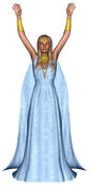
I introduce myself as High Mage Helena, Advisor to Princess Azulica of the White Tower. Throughout Wyken, I am charged with selecting apprentices for the magical schools and conducting magical research. I hope these pages find you in good will, for some of the things here are not meant for evil eyes.
Specializations of Magic – The forms and arts of the different types of magic.
While many forms and arts of magic exist around the continent, these listed below cover all the main categories of magic. Remember, some are more legal than others, and some are not legal at all.
-
- Dark Magic – Illegal in many various parts throughout the continent, Dark Magic is seen as a curse to the world by many. Commonly involving curses and attack spells, Dark Magic is a force to be reckoned with. Subtypes:
- Blood Sorcery – A subtype of Dark Magic aimed at manipulation of a victim’s, or your own, blood to either cause pain or heal.
- Shadow Arts – Literally controlling shadows and darkness, this subtype is commonly used by Dark Mages to keep away from prying eyes. With the ability to change natural light into darkness and form shadows out of nothing, it is amazing at stealth.
- Hate Magic – The most controversy of all the Dark Magic subtypes, Hate Magic is used to cause utter pain and death through the use of one of the most powerful of human emotions: Hate. This magic feeds off the caster’s emotions, strengthening it to a dangerous level for everyone.
- Dark Magic – Illegal in many various parts throughout the continent, Dark Magic is seen as a curse to the world by many. Commonly involving curses and attack spells, Dark Magic is a force to be reckoned with. Subtypes:
- Elemental Magic – Elemental magic deals with the four main elements in the world: Fire, Earth, Water, and Air. Each one brings new powers to the mage and can be used in a variety of different ways. It is the most common type of magic. Subtypes:
-
-
- Pyromancy – An aggressive form of magic that allows the mage to control heat and flames. Generally, Pyromancer is seen as dangerous and the public is usually wary of it.
- Geomancy – A very utilitarian magic, with many practical uses. Geomancy, or earth magic, can simply be used to shape metal into different forms or move the very earth itself to block the caster’s enemies.
- Hydromancy – A flowing magic with a lot of variety. From walking on water to shooting jets of liquid, Hydromancy can be both beautiful and deadly. It also covers the magic of frost and ice as well.
- Air Sorcery – Using etheric energy and the very air itself, mages have developed many useful spells. Ranging from blasts of condensed air to floating objects and people, Air Sorcery is interesting and evolving quite quickly.
-
- Thought Magic – The ultimate magic of thought and mind, Thought Magic manipulates how people see and believe reality. From illusions, nightmares, and memory, Thought Magic has a bad name in the wizarding world, with many spells being completely illegal. Subtypes:
-
-
- Illusion Conjuring – The bread and butter of Thought Magic, so to speak. Illusion Conjuring can be used in a wide variety of situations such as changing physical appearance to changing the look and feel of an object. However, some of the nastier spells are illegal throughout the continent.
- Nightmare Hexing – A completely illegal subtype of Thought Magic, Nightmare Hexing is used to hex and conjure dangerous nightmares and dreadful semblances of doom.
- Memory Magic – A utilitarian subtype of Thought Magic, it can have helpful spells and dangerous spells. Recalling lost memories or making memories disappear, this magic has many legal and illegal uses.
-
- Celestial Magic – Celestial Magic is seen as the ultimate good in the wizarding world. Generally, it is used for healing and other cleansing spells. However, it has many other uses. All spells are at least semi-legal, with most being completely legal throughout the continent. Subtypes:
-
-
- Mending Magic – A healing subtype of Celestial Magic, this form of magic is normally used to heal and mend wounds. Spells vary from repairing injuries to cleansing poisons.
- Clarity Charms – An interesting form of magic, Clarity Charms can range from countering other magic to forcing people to tell the truth. Some of the spells in this subtype are only semi-legal.
- Hope Magic – Springing from the caster’s emotions, this is commonly considered the opposite of Hate Magic. As Hate Magic strengthens from emotions of hate, Hope Magic strengthens from emotions of peace and hope. Capable of casting spells of protection and calming, Hope Magic is very useful in combat, but offers little in offensive spells.
-
- Alchemical Magic – A truly ‘jack of all trades’ in the magical world, Alchemical Magic believes in the balance and purity throughout nature and in the natural world. While not having many spells of its own, Alchemical Magic usually deals with pure etheric energy and potions, elixirs, and enchanted talismans.
-
- Enchantment – The art of imbuing objects and items with certain enchants to give them powers. It has a great deal of variety and pulls from other schools and specializations to give it this variety. A mage who knows Pyromancy could give an enchant of flame on a weapon, and so on. This also includes the imbuing of potions and elixirs with etheric energy.
- Flux Force – Flux Force is the opposite of the Balance Arts in a way, symbolizing the constant change in the world. From slowing and speeding time to countering spells, Flux Force is mostly legal, except for a few spells.
- Balance Arts – Generally, it is regarded as the opposite of Flux Force. The Balance Arts symbolizes the balance in nature and the world. Used as a basis to cast spells of pure etheric energy, the Balance Arts is the banner of the mage world: Magic Missile.
Casting Magic – Of what to do and not to do.
While all spells are different, most are commonly augmented by words of power and/or hand motions. It would be too tedious to go over all hand motions and words in this chapter. I would teach how to stop magic from being casted, so you know what to not do.
- Dark Steel, the combination of molten obsidian and iron, can only be created by a powerful combination of Earth and Fire mage. Dark Steel, when used as a blade of a weapon, deflects direct spells and enchantments. It goes without saying, Dark Steel is incredibly rare and hard to make, but is the most powerful defense against magic in the world.
- Magebane is a rare plant found in the bitter north. Magebane, when ingested as tea or food, prevents a mage from connecting to etheric energy. In simpler terms, when ingested it stops mages from being able to cast any spells. It is an uncommon plant, but since its discovery has been used throughout the continent.
- Binding and Gagging is the act of tying a mage’s hands behind their back and gagging them. This prevents all but the most experienced of Archmages from casting spells. This is how most officials within the government deal with rogue and dark mages.
Mage Classes – The weak, the strong, and the others.
Many different classes of mages exist in the wizarding world. As mages increase in skill and practice, the are generally considered more powerful and moved to a higher class. This is not normally used by the commoners throughout the continent, but some of the officials use this to rank mages by their skill and power. The final class is an etheric mutation, only seen once in recorded history.
- Novice – The lowest class of a mage. Novices are normally just starting to learn magic and have little to no power at all. Novices must always use the words and hand components of spells, and most spells require them to cast multiple times before their do it correctly.
- Apprentice – Considered more powerful than a Novice, Apprentices can cast a wider variety of spells and are deciding what specialization of magic they wish to follow, but have yet to pick a subtype. Apprentices must always use the words and hand components of a spell.
- Apprentice Spellweaver – Apprentices who have proven themselves by studying their specialization and picking a subtype are granted the title of Apprentice Spellweaver. They normally have a wider variety of spells at their disposal and know some of the more complex spell theories, if not how to do the spells themselves. Apprentice Spellweavers must always use the words and hand components of a spell.
- Journeyman Spellweaver – Experienced nearly to the point of a true Mage, Journeyman Spellweavers can cast a wider variety of spells, but are still confined to the point of one subtype. Journeyman Spellweavers still require the words and hand components of a spell.
- Mage – A Mage is generally the hallmark of the magical world. This class is normally when the apprenticeship ends and the new Mage is ready to go off into the world to learn more or to enroll in a special magical college. Most Mages are now experienced with magic and know many spells, and perhaps even a few subtypes (or rarely another specialization). However, they still require the words and hand components of a spell to cast it.
- Grand Mage – A Grand Mage is distinguished above the rest of the Mages, usually starting to work on a second (or third, depending on how advanced they are) specialization of magic (or perhaps even a dual specialization). Grand Mages know quite a lot about spell theory and some take on apprentices. Very rarely with supreme concentration and no distractions, a Grand Mage may be able to cast a spell without the words, but they still require the hand components.
- High Mage – A High Mage is usually defined by a Mage who is skilled enough to know multiple specializations of magic, numerous subtypes, and even a dual specialization or two. High Mages can rarely cast a spell without words and/or hand components, but it requires supreme concentration and no distractions.
- Archmage – Archmages are the most powerful class of wizard, with the only Archmages in recorded history being Queen Elaine of the White Tower and the infamous Necromancer. Archmages, with powerful spells of a huge variety, make all other classes seem simple and weak. Archmages are able to cast spells without word and hand components simpler than other classes, but it still requires a great deal of effort.
- Ethereal Mage – An etheric mutation, leaving an unfortunate mage scarred for life, has only be seen once in all of history: The mage and who destroyed the lands, summoned a dark god, and started the Dark Ages. Little in history is know about him, but from what historians can gleam, he was mutated by highly concentrated etheric energy. They believe the mage retained a telepathic form of communication, but speech and intelligent thought had left him.
Dual Specializations – Sum of its parts, yet new power is born.
Dual Specializations are what every mage dreams of. Being a combination of two subtypes, Dual Specializations bring new spells and powers into the field of magic. Only experienced mages in both subtypes can hope to try dual specializations.
- Storm Calling – A combination of Water and Air subtypes, Storm Calling involves the power of weather including lightning, rain, snow, and other various forms of storms and precipitation.
- Death Weaving – A truly horrifying combination of Nightmare and Blood subtypes, Death Weaving is all about commanding the undead. The Necromancer is the most famous mage to have used this dual specialization and has caused much ruin with it.
- Dream Charming – An odd combination of Clarity and Nightmare subtypes. While being illegal due to it coming from Nightmare Magic, Dream Charming is fairly benign. Used to conjure dreams of peace and serenity, Dream Charming has been known to have healing effects on the mind.
-
- Meteor Magic – The powerful combination of the Earth and Fire subtypes make this a dangerous dual specialization. Molten rock, flaming stars, and lava. What more could a mage ask for?
- Soul/Aura Whispering – While combining two opposites into one thing doesn’t usually equal good results, the combination of Flux Magic and Balance Magic actually do. Soul Whispering is the most controversial and interesting magic out there, literally influencing what human scribes and mages refer to as the ‘soul’ of a body. Elves and Sentruls think of it differently however, and call it an ‘aura’. Either way, this magic is interesting and begs to be studied more. It is probably the least known about magic on the continent.
- Corruptionism – The dark combination of Hate Magic and Blood Magic brings about the dreadful dual specialization of Corruptionism. Corruption Magic is most notably used to bring about vile non-permanent mutations or ‘corruptions’ to the body of the person being casted on or sometimes to the area around the mage. Corruptionism is very dangerous, both to the person being corrupted and the enemies of that person. The Empire actively hunts down mages of Corruptionism.
- Etheric Magic – While all magic has to do with etheric energy, most specializations rarely deal with it in its pure absolute form. A combination of Balance Magic and Clarity Magic, Etheric Magic deals with mage’s connection to the Ether Realm and it is the type of magic rumoured to have created the Waylines.
Magical Alterations – The effects of etheric energy on the mortal body
The different types of magics can lead to many different types of alterations and mutations that are a cumulative effect of channeling, commanding, and controlling etheric energy by the mage. In other words, the more a mage uses etheric energy, the more likely an alteration will occur to their body, especially depending on the type of magic. Beginning mages will not experience this, for the magic must be used often to cause a alteration. If two alterations contradict each other, the mage will have the alteration of the magic they use more. While other, rarer forms of alterations are possible, I will go over the major ones:
- Dark Magic – Dark Magic has some of the most startling transformations, perhaps showing the true evil of this type of magic.
-
-
- Blood Sorcery tends to cause the skin of the mage to turn paler with time. The hair also takes on a slight reddish appearance and veins become more apparent.
- Shadow Arts has the slight chance of permanently imbuing the mage with a weaker variation of Shadow Walking.
- Hate Magic causes the eyes of the mage to gradually turn brighter and brighter red as more Hate Magic is used.
- Death Weaving, a Dual Specialization of Nightmare and Blood, causes the skin of the mage to get a grey tint to it. The eyes also gradually lose their luster and become dull and zombie-like.
- Corruptionism brings about the deadliest and most dangerous form of alteration there is. Rarely, Corruptionism leaves behind permanently corrupted body parts, unlike the temporary spell ones. This can be as far-ranging as clawed hands, charred leathery skin, or horns and spikes around the body.
-
- Elemental Magic – Elemental Magic is a common specialization of magic, but brings out fairly benign and harmless alterations, if any.
-
-
- Pyromancy turns the hair quite red, though much more than Blood Magic does. Mages who study Pyromancy may also develop a slight fear of water, but it is rare.
- Geomancy has no recorded alterations.
- Hydromancy has no recorded alterations.
- Air Sorcery tends to turn the hair of the mage lighter than normal. Light brown hair turns to a bleach colour, while dark brown may turn much lighter.
- Meteor Magic has a tendency to cause the mages who study it to have a bad temper. Those who study Meteor Magic also seem to have a slight heat resistance, though fire still burns them.
- Storm Calling gives the eyes of the mage a stormy look. Hair tends to go completely white.
-
- Thought Magic – Thought Magic has very interesting alterations, some of which are harmless while others are not so much.
-
-
- Illusion Magic gives the mage misty eyes that seem empty of expression. Sometimes, but very rarely, permanent illusions around the body develop, showing white or grey runes and other inscriptions in some indecipherable language.
- Nightmare Magic has the same misty eyes of Illusion Magic, but the rare inscriptions are written in a seemingly different language than those of Illusion Magic. The inscriptions are also written in a darker colour than those of Illusion Magic.
- Memory Magic has no physical alterations, but sometimes grant the mage a better, more detailed memory.
- Dream Magic has one of the strangest effects possible, sometimes, but very rarely, giving the mage who studies it dreams of the future. While very rare, and usually very confusing, the dreams will tell of events to come.
-
- Celestial Magic – Celestial Magic, while being perhaps the most benign specialization, has some interesting alterations that can be seen as very harmless or very harmful.
-
-
- Mending Magic has no recorded alterations.
- Clarity Charms tend to imprint a small rune on the mage’s tongue, which has a chance to glow sometimes. When it glows, the mage must always speak the truth, whether they want to or not.
- Hope Magic sometimes makes the mage more calm and peaceful. Mages who have deeply studied Hope Magic seem to never wish to cause harm to anyone or anything.
- Etheric Magic causes the eyes of the mage to turn a deep purple. Rarely, it has been noticed that mages who have studied Etheric Magic have some sort of infectious disease… Not much is know at the present time about it.
-
- Alchemical Magic – All things in balance doesn’t necessarily mean no alterations, but ironically in alchemical magic alterations are very rare.
-
- Enchantment sometimes causes runes to appear in the mage’s skin, almost as if it has been burned into their skin. Deep cuts seem to scrape the runes off for a while, but they always reappear.
- Flux Force has no recorded alterations.
- The Balance Arts have no recorded alterations.
- Soul/Aura Whispering has no recorded alterations, but has never been studied much